
As shared values shift, what’s next for U.S.-Japan relations?
That premise is now under strain. The second Trump administration appears to be moving away from the liberal values the United States long claimed to uphold. Instead, it is seeking to redefine Christianity as a central value of the American nation. If Washington ceases to place liberal values at the center of its diplomacy and instead foregrounds a national ideology rooted in Christianity, the consequences will extend to its allies. For Japan, whose postwar position has been tied to the U.S.-led liberal order, the implications are significant.
This brief examines the administration’s Christian turn, its selective use of religious freedom toward China, and the implications for U.S.-Japan relations.
Christian nationalism
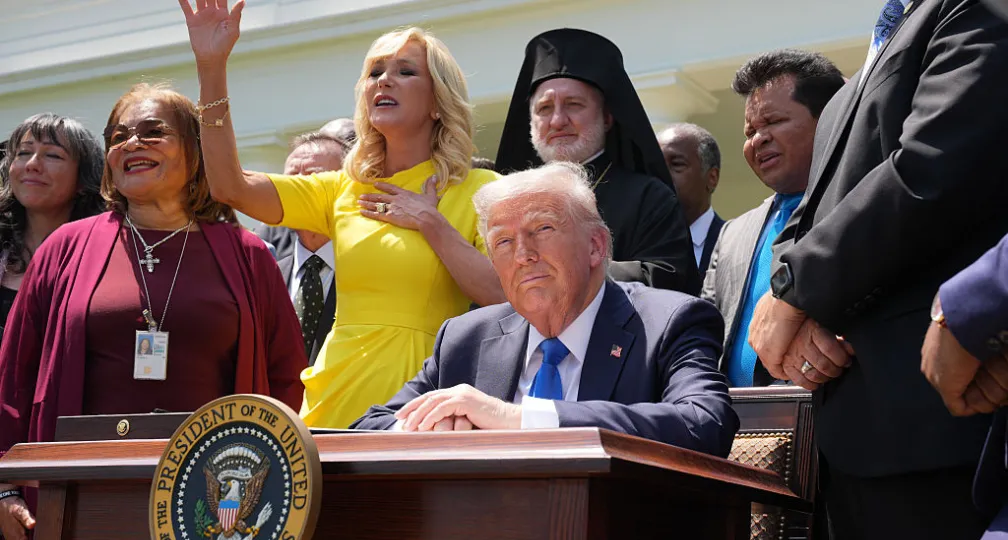
On May 17, a large gathering titled “Rededicate 250” was held on the National Mall in Washington, D.C. It was the first major event connected to “America 250,” the initiative marking the 250th anniversary of the United States on July 4. Religious leaders and senior political figures took part, including Vice President JD Vance and President Donald Trump.
The event was not simply religious. Its political message was clear: America could be renewed by being rededicated to God. The music and speeches pointed to a broader effort to rebuild the nation on a religious foundation after what participants viewed as the secularizing effects of liberalism.
This tendency has been visible since the administration took office in January 2025. Within weeks, the Task Force to Eradicate Anti-Christian Bias and the Faith Office, led by evangelical pastor Paula White as a senior advisor, were created to defend conservative Christian values. They also aim to remove diversity, equity, and inclusion (DEI) policies from government and the public sphere. The Faith Office has been closely involved in the 250th anniversary events and has used them to promote conservative Christian values.
For foreign policy, the key development is the Religious Liberty Commission, launched in May 2025. Although it uses the language of religious freedom, its focus is not minority rights in general. Rather, it seeks to protect conservative Christianity, which its supporters believe has been marginalized in liberal society. It also has an external dimension: protecting Christians overseas, including those facing persecution in China and elsewhere.
The administration is not merely appealing to religious voters. It is attempting to institutionalize Christianity and place conservative Christianity closer to the center of America’s national ideology.
Targeting China
China is a key test of how this shift appears in diplomacy. The Chinese Communist Party’s repression of underground churches has long been criticized by U.S. religious conservatives and human rights organizations. The administration, particularly through the State Department, has treated the issue seriously.
Yet its approach lacks the universalism associated with traditional American values diplomacy. At the Beijing U.S.-China summit in May, President Trump did not make religious freedom a major agenda item. Reports suggest that he raised the release of Pastor Jin Mingri, a leader of an underground church, with President Xi Jinping. But there is little indication that he addressed the broader range of religious and human rights issues involving Xinjiang, Tibet, Falun Gong, Hong Kong, or underground churches as a whole.
This stance appears cautious even compared with earlier Republican administrations supported by religious conservatives. During his 2005 visit to China, President George W. Bush stated that the Chinese people should be free to worship and referred to underground churches, the Catholic Church, and Tibetan Buddhism. His remarks reflected an effort to press China on universal values such as democracy, human rights, and religious freedom.
The current approach suggests a different logic. Religious freedom is not being pursued consistently as a universal principle. Rather, it is being deployed selectively within state-to-state negotiations.
This does not mean that religion has disappeared from diplomacy. Trump’s decision to raise Pastor Jin’s case with Xi sent a message to religious conservatives at home. What has changed is the status of religious freedom. In the past, it formed part of the universal values the United States sought to embed in the international order. Today, it increasingly functions as a diplomatic resource to be used according to circumstance.
Japan repercussions
Postwar U.S.-Japan relations have long been justified through the idea of shared liberal values. But the values emphasized by the second Trump administration are moving closer to the concerns of religious conservatives than to democracy and human rights. If religious freedom is now used as a selective diplomatic resource, its effects will not be confined to China. Japan, too, may become subject to this logic.
The Unification Church issue is one example. After the assassination of former Japanese Prime Minister Shinzo Abe, the Japanese government strengthened its regulation of religious corporations, including by seeking a dissolution order against the church. Some U.S. religious conservatives, however, have framed Japan’s response as a religious freedom problem. Former U.S. Secretary of State Mike Pompeo and others have expressed concern about the Japanese government’s actions.
This does not mean that the U.S.-Japan alliance itself will be shaken. The security relationship will remain essential. But the conventional understanding of the two countries as partners sharing liberal values will become increasingly difficult to sustain. The alliance may continue, while its normative foundation changes.
This shift is not only about religion. Behind it lies the broader destabilization of the liberal international order. Great-power rivalry is intensifying, and the existing order is becoming increasingly dysfunctional. As states compete over scarce resources such as rare earths and advanced technologies such as AI, religious rhetoric and symbols can serve as tools for strengthening national cohesion. From the perspective of the second Trump administration and religious conservatives, excessive multiculturalism appears to weaken that cohesion.
Japan cannot easily follow the same path. Surrounded by major powers and lacking in natural resources, Japan’s prosperity depends on remaining open to the outside world. It also cannot easily dispense with the U.S.-Japan alliance, whether for security or economic reasons. Yet it would be reckless to assume that liberal values will continue to anchor American diplomacy as before. Japan must instead confront the transformation of values in the United States, diversify its diplomatic relationships, and reconsider the foundations of its own values.
The argument here is not that the U.S.-Japan alliance is ending. Rather, the premise of “shared values” that long supported the alliance is changing. What does the U.S.-Japan alliance mean in an era when liberal values can no longer be assumed to be shared? The second Trump administration has made that question more urgent than ever.
(Photo Credit: Andrew Harnik / Getty Images North America)
[Note] This article was posted to the Japan Times on July 16, 2026:
https://www.japantimes.co.jp/commentary/2026/07/16/japan/us-japan-relations-next/

Geoeconomic Briefing
Geoeconomic Briefing is a series featuring researchers at the IOG focused on Japan’s challenges in that field. It also provides analyses of the state of the world and trade risks, as well as technological and industrial structures (Editor-in-chief: Dr. Kazuto Suzuki, Director, Institute of Geoeconomics (IOG); Professor, The University of Tokyo).
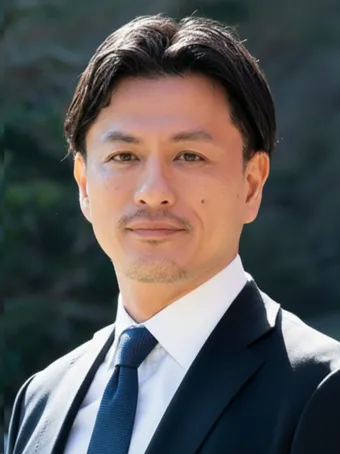
Visiting Senior Research Fellow
Yoshiyuki Kato was born in Aichi Prefecture in 1979, he received his Ph.D. from Princeton Theological Seminary. After serving as Associate Professor at Tokyo Christian University and as a Visiting Fellow at Clare Hall, University of Cambridge, and the London School of Economics, he is now Professor in the College of Arts at Rikkyo University. [Concurrent Position] Professor, College of Arts, Rikkyo University
View Profile-
 As shared values shift, what's next for U.S.-Japan relations?2026.07.17
 - Why Pax Silica Is About More Than AI Chips2026.07.15
- The Case for Underground Defense: Japan's Military Lessons from the Iran War2026.07.14
-
 Strategy Amidst Weaponized Economics2026.07.14
 - Japan and India: Historic Strategic Convergence2026.07.07


 Sovereign AI After Fugu: From Vertical Dominance to Horizontal Resilience2026.06.24
- European Industry and the “Second China Shock”2026.06.19
- China’s Rare Earth Export Controls: “International Rules” Orientation and the Avant-Garde Use of Security Exceptions2026.07.03
- The Iran-U.S. MOU Offers a Reprieve, but Not Relief2026.07.02
 Japan and India: Historic Strategic Convergence2026.07.07