
National Security and the Stakes of ‘Technology Sovereignty’
Investment in dual-use technologies — those with both civilian and military applications — is increasingly seen as an efficient way for states to acquire critical capabilities. But because these technologies are often developed outside government, securing them requires more than technological capacity. It requires a way to govern dispersed capabilities without stifling them.
This is the challenge of technology sovereignty.
Countries increasingly speak of AI sovereignty, digital sovereignty and data sovereignty. Technology sovereignty provides a broader framework for understanding these efforts.
State sovereignty has two dimensions: external autonomy and internal governance. Both are relevant to technology sovereignty, but the concepts are not equivalent. State sovereignty is grounded in legal rights, while its practical substance is shaped by relations among states. Technology sovereignty is primarily a question of capacity: whether a state can secure the technologies it considers strategically important and exercise meaningful control over their supply and use.
Unlike traditional sovereignty, technology sovereignty also requires attention to private actors — corporations, startups and universities. The challenge is to aggregate these dispersed domestic capabilities while preserving the conditions that allow them to innovate.
Autonomy and security
Technological autarky is no longer realistic. States are embedded in international technology networks, making the question not whether they can achieve complete independence but how much strategic autonomy they require.
Autonomy and security do not always point in the same direction. Reducing dependence on states of concern, such as China, can strengthen both. But dependence on critical technologies can also exist among allies, creating vulnerabilities in civilian and military systems.
AI sovereignty illustrates this tension. European public institutions’ efforts to avoid dependence on Palantir, the U.S. data analytics company with extensive defense-related work, show that technological dependence can be a concern even among partners.
Yet states may also accept technological dependence when it enhances security. Alliance relationships can require countries to surrender some autonomy in exchange for greater protection. The same logic applies to technology.
Japan faces this choice as it considers how to incorporate AI into its defense capabilities while maintaining control over sensitive data and developing domestic alternatives. The objective is not complete independence but a level of technological autonomy compatible with national security.
Internal governance
Having strategically important technology within a country’s borders does not mean the government can control or mobilize it. This makes internal governance as important as external autonomy.
As the strategic value of dual-use technology grows, governments need access to civilian capabilities while protecting them from security threats. Market forces alone cannot resolve vulnerabilities in supply chains or guarantee that private technologies will be available when national-security needs arise.
Governments therefore use export controls, information-security requirements, public R&D investment and subsidies to influence technological development. Japan, for example, is expanding efforts to incorporate technologies developed by startups and other private companies into its defense capabilities.
But government intervention creates its own risks. Excessive controls can isolate researchers and companies from international networks, increase compliance costs and discourage innovation. A state that restricts the private sector too heavily may weaken the very technological base it is trying to protect.
The central problem, then, is not whether governments should intervene, but how far that intervention can go.
Anthropic dispute
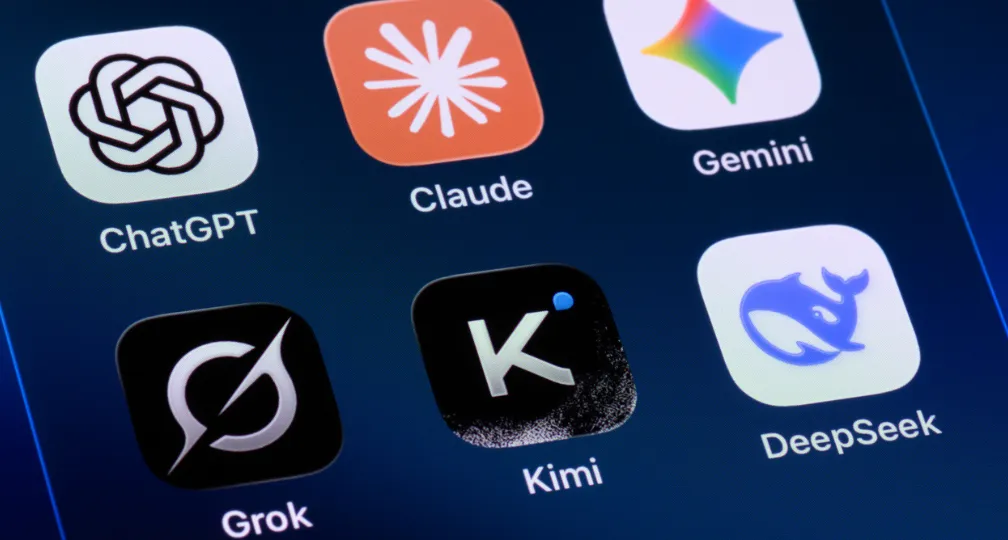
The recent dispute between the U.S. government and Anthropic offers a revealing example. After negotiations with the Department of Defense reached an impasse over the use of Anthropic’s Claude AI models, the Trump administration moved to designate Anthropic a supply-chain risk. Anthropic had sought to prohibit the use of its models for mass domestic surveillance of Americans and fully autonomous weapons. On March 4, the company said it had received formal notification of the designation and subsequently challenged it in court.
The dispute exposed a basic problem of technology sovereignty. The government needed access to a strategically important technology, while the company sought to retain limits on how that technology could be used. Procurement rules and economic pressure gave the government significant leverage, but they did not resolve the question of who should ultimately determine the permissible uses of the technology.
A different approach is co-regulation through public-private agreements. In May, the Defense Department reached agreements with eight technology companies — Amazon Web Services, Google, Microsoft, NVIDIA, OpenAI, Reflection, Oracle and SpaceX — to deploy AI capabilities on classified military networks. The agreements also sought to diversify the department’s AI suppliers and reduce dependence on a single provider. Anthropic was not among the companies.
Diversification can reduce dependence, but it does not eliminate the governance problem. Private companies may still impose conditions on how their technologies are used, particularly when national-security requirements conflict with corporate policies or values.
The Anthropic case is instructive precisely because the company had already provided Claude for national-security applications, including intelligence analysis, modeling and simulation, operational planning and cyber operations. Its dispute with the government was therefore not simply about whether AI should support national security, but about who should set the limits on that support.
That distinction is crucial. Technology sovereignty is not achieved merely by bringing technology under national control. It also depends on the rules governing how that technology can be used.
Japan’s challenge
Liberal democracies can promote or restrict private-sector activity, but their ability to compel companies to provide technologies against their will is inherently limited. This distinguishes them from authoritarian systems such as China, where the government can more directly aggregate private capabilities and mobilize and regulate technology.
Japan is developing institutions to leverage dual-use technologies and strengthen its technological autonomy. Its challenge is to build a domestic technology base deep enough to support national security while creating incentives for companies and research institutions to participate voluntarily.
That requires more than government policy. Private actors also need to consider the relationship between their technologies and the national interest, including the ethical and political questions raised by government projects as well as their commercial value.
The goal should not be technological isolation or unrestricted government control. It should be the ability to secure strategically important capabilities while preserving the private-sector autonomy and international connections that drive innovation.
Technology sovereignty, ultimately, is a question of governance: Can a democratic state mobilize the technological capabilities it needs for security without undermining the freedoms and institutions that produced those capabilities in the first place?
That is the balance Japan and other liberal democracies must now find.
(Photo Credit: TR RUMON / Shutterstock)
[Note] This article was posted to the Japan Times on September 22, 2026:
https://www.japantimes.co.jp/commentary/2026/09/22/japan/national-security-technology-sovereignty/

Geoeconomic Briefing
Geoeconomic Briefing is a series featuring researchers at the IOG focused on Japan’s challenges in that field. It also provides analyses of the state of the world and trade risks, as well as technological and industrial structures (Editor-in-chief: Dr. Kazuto Suzuki, Director, Institute of Geoeconomics (IOG); Professor, The University of Tokyo).
Disclaimer: The opinions expressed in this Geoeconomic Briefing do not necessarily reflect those of the International House of Japan, the Institute of Geoeconomics (IOG) or any other organizations to which the author belongs.
Visiting Senior Research Fellow
SAITOU Kousuke is a professor at the Faculty of Global Studies, Sophia University, Japan. He received his Ph.D. in International Political Economy from the Graduate School of Humanities and Social Sciences, University of Tsukuba, Japan. Prior to joining Sophia University to teach international security studies, he was an associate professor at Yokohama National University, Japan. [Concurrent Position] Professor, Faculty of Global Studies, Sophia University
View Profile