
Connecting Europe and the Indo-Pacific: Why Japan and Germany Need Stronger Space Security Cooperation
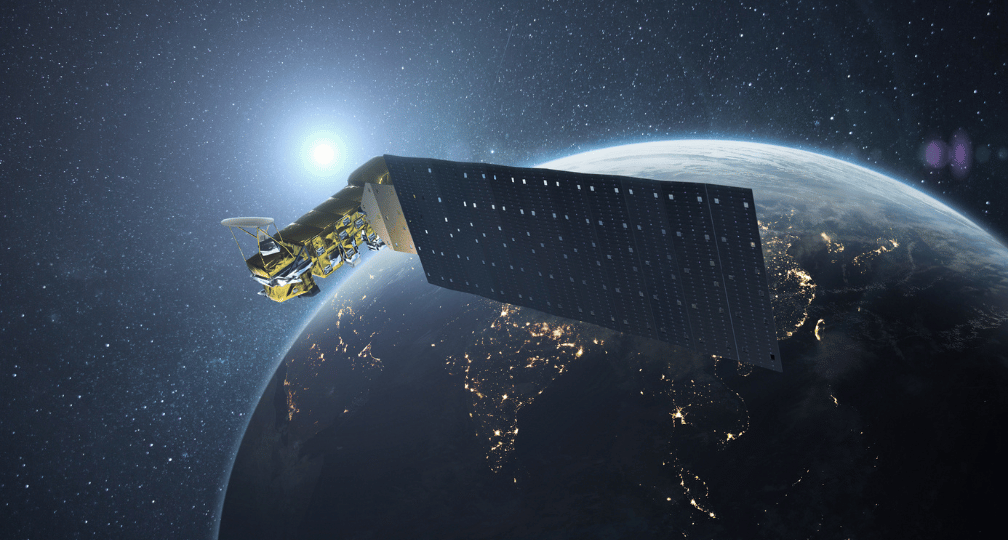
The United States under the second Trump administration is relinquishing its firm standing as a guardian of the international order and a provider of security, while China and Russia are deepening their alignment. Cooperation between Europe and Japan, which share values, has therefore become more important than ever. But what should that cooperation look like in concrete terms? In particular, what defense objectives should Germany and Japan, the core players in Europe and Asia respectively, work toward?
This commentary focuses on cooperation in the space domain, which has attracted growing attention from a security perspective. In this domain, the constraint of distance that has long impeded Japan–Germany defense cooperation can be overcome, making possible cooperation that strengthens both countries’ defense capabilities more effectively. Reviewing how bilateral defense cooperation has developed to date, we propose how space cooperation could carry it further.
A Changing Security Environment
Defense cooperation between Japan and Germany has advanced markedly over the past decade or so, beginning with a defense equipment agreement signed in 2017. An information security agreement followed in 2021, and an Acquisition and Cross-Servicing Agreement (ACSA) entered into force in 2024; discussions on a reciprocal access agreement are reportedly under way.[2] Beyond treaty-making, regular foreign and defense ministerial (“2+2”) meetings and intergovernmental consultations have kept bilateral cooperation moving steadily through changes of government on both sides. This is hardly surprising, given that both countries are G7 members that share values such as democracy and the rule of law, and that both are U.S. allies.
Yet over the decade in which Japan and Germany have advanced this cooperation, the security environment around them has changed dramatically. Russia’s invasion of Ukraine in 2022, a plain act of aggression against a sovereign state, sent shockwaves around the world. In its wake, Germany under Scholz declared a Zeitenwende. Prime Minister Fumio Kishida, the first Japanese prime minister to attend a NATO summit, declared that “Ukraine today may be East Asia tomorrow,”[3] making clear his view that European and East Asian security are linked. Three years later, the second Trump administration took office, and the United States, which led the liberal international order for decades after the Second World War, has more openly put its own interests first. Meanwhile, China, Russia, and North Korea are drawing ever closer and seeking to build an order that rivals that of the West. Japan and Germany are thus being compelled to rethink, with an urgency they have not faced before, how they contribute to sustaining the international order and strengthening the partnership among allies and like-minded countries.
What Should Japan–Germany Defense Cooperation Look Like?
Looking back on bilateral defense cooperation in this light, its significance seems to have gone unquestioned because it is cooperation between countries with shared values. It has deepened steadily without much scrutiny of the direct benefits to each side or its effectiveness in a contingency. Yet the two countries’ threat perceptions naturally differ: for Germany, at the center of Europe, the main threat is Russia, while for Japan, a major power in East Asia, it is China and North Korea. Given the geographic distance as well, it is unclear how far the agreements and intergovernmental dialogues accumulated so far would prove effective if a contingency actually occurred.
Germany, for example, has to date placed the Indo-Pacific at the center of its security cooperation with Japan. Various government and strategy documents point to the China threat and to the importance of cooperation in that region,[4] but the Indo-Pacific is self-evidently far from Germany, both physically and psychologically. Moreover, since the war in Ukraine the threat from neighboring Russia has become acute,[5] while the German government continues to prioritize its economic interests in its relations with China.[6] This leaves a wide gap with Japan’s perception of the China threat.
Given differing threat perceptions and physical distance, the foundations of a defense partnership between the two nations premised on a particular region, whether Europe or the Indo-Pacific, is not robust enough at this moment. If the two countries are to advance defense cooperation in a genuine sense, they need to seek forms that are more effective and bring more direct benefits to both.
Defense cooperation in the space domain is one such form. By their nature, the data and services provided by satellites orbiting the Earth need not be confined to a particular region such as Europe or the Indo-Pacific, and so can transcend differences in threat perception and geographic distance. Satellite data are also useful for responding to natural disasters and environmental problems. Cooperation can thus be designed with effectiveness in a contingency in mind while benefiting both sides in peacetime. Involving private companies would, in addition, broaden the base of cooperation in a sustainable way.
Such cooperation would by no means signify a break from the U.S.-centered alliance system. Rather, it should be conceived as reinforcing each country’s existing cooperation with the United States and, ideally, drawing greater U.S. engagement, thereby strengthening the cohesion of the West as a whole in defense.
Prospects and Limits of Japan–Germany Security Space Cooperation
In civil space, the two countries have a long history of cooperation spanning decades, centered on the Japan Aerospace Exploration Agency (JAXA) and the German Aerospace Center (DLR). It covers a wide range of fields, including Earth observation, space science, space exploration, and space transportation. In space science, for example, MASCOT, the small lander carried aboard JAXA’s Hayabusa2 asteroid explorer (launched in 2014), was jointly developed by DLR and France’s National Centre for Space Studies (CNES). DLR has likewise arranged to fly a rover co-developed with CNES aboard JAXA’s Martian Moons eXploration (MMX) spacecraft, launched on October 20, 2026.[7]
However, this strong civil-sector relationship has not necessarily translated into cooperation in security space. Exchanges between the two countries’ space units have begun, including an expert meeting on security space cooperation and the dispatch of Japan Self-Defense Forces personnel to Germany’s space situational awareness course.[8] Even so, cooperation in security space remains largely at the stage of dialogue, human resource development, and mutual understanding, and has not reached cooperation on concrete capabilities. Behind this lies the fact that neither country had sufficient unique space systems, data, or organizational structures to offer the other. In addition, each has also built up its space capabilities around its own alliance framework: the Japan–U.S. alliance for Japan, and NATO and the EU for Germany.
Now, however, both countries are placing great weight on developing security space capabilities. By increasing budget for space security and building organizations to conduct space missions, the constraints described above are therefore set to ease considerably. Japan’s Ministry of Defense space-related budget, on an expenditure basis, rose sharply from 31.4 billion Yen in FY2020 to 221.2 billion Yen in FY2026.[9] As budgets grow, Japan is accelerating the development of satellite constellations for intelligence, surveillance, and reconnaissance (ISR) in support of stand-off defense capabilities, space domain awareness (SDA) systems, and renewing military satellite communication systems. It is also seeking to strengthen mission assurance for these space systems.[10] Germany, too, is moving to make large-scale investments in SDA, military satellite communications, ISR, and resilience, based on its Space Safety and Security Strategy (published in November 2025).[11]
The time is ripe to strengthen security space cooperation between Japan and Germany. Yet the two countries need not launch large-scale joint space projects. Their strategic environments and threat perceptions still differ, while both must first give priority to building their own national capabilities. The realistic and effective course is thus to identify areas where interlinking domestic investments could produce greater benefits than either country could achieve alone.
From this perspective, the geographic distance between Japan and Germany, usually seen as a constraint on cooperation, can become an advantage in space domain. Satellite data and their analytical products can be used in regions far from the country that provides the capability. Moreover, regarding space situational awareness, combining sensors and ground systems distributed across different regions can improves the temporal and spatial coverage of space monitoring, enable information verification through independent sources, and increase redundancy against system failures. In short, in the space domain it is precisely because of the geographical distance that the two countries’ capabilities can complement each other.
On this premise, this article argues that Japan and Germany should set the following objective in security space cooperation: to establish a framework linking space capabilities distributed across Europe and the Indo-Pacific, which enables both nations to gain situational awareness and detect threats more rapidly in their own regions. This objective would allow the two nations to develop meaningful security cooperation without presupposing a complete convergence of threat perceptions or a commitment to mutual defense.
Proposals for Space Security Cooperation
On this basis, we propose the following three areas of Japan–Germany cooperation in security space.
First, data sharing to “know together” the situation in the space domain. Responding to the growing scale and diversity of threats in space requires more sensors and more data. Both countries currently operate ground-based space monitoring sensors, and Japan’s Ministry of Defense plans to launch an “SDA satellite” that monitors objects from orbit within FY2026.[12] Even so, it is difficult for either country’s own sensors alone to cover the vast space domain comprehensively and continuously. Both also depend, to differing degrees, on space situational information from abroad, chiefly from the United States. To improve capabilities while diversifying sources of dependence, it is therefore desirable for Japan and Germany to share, in stages, information such as the orbits of space objects, unusual close approaches, suspicious satellite behavior, and the status of radio-frequency jamming. Japan has been already developing space domain awareness cooperation with France, while Germany is doing so with Australia. These precedents suggest that similar cooperation between Japan and Germany would also be institutionally feasible.[13]
Second, mutual procurement or joint use of commercial Earth observation data to “see together” the situation on the ground. The war in Ukraine has demonstrated that Earth observation data provided by commercial operators is highly effective for situational awareness on the battlefield and for target detection. However, when only a small number of satellites are operating in orbit, the frequency of imaging over any particular location, or revisit rate, is low, making it difficult to obtain the timely situational awareness on the ground that military operations require. Combining data from Earth observation satellites owned by Japanese and German commercial operators could, in effect, raise revisit rate. For example, commercial operators in the two countries that own such satellites could establish cooperative relationships, with Japanese operators delivering satellite data and analytical products to Japan’s Ministry of Defense and German companies doing the same for Germany’s Ministry of Defence. Japan and Germany share a strength in satellites that observe the Earth using synthetic aperture radar (SAR), and several commercial operators can provide such capabilities. In this model, the two governments would act as customers and make use of the cooperative relationships among these operators.
Third, building the foundations to “operate together,” so that these cooperative relationships become effective capabilities for both countries. Gradually expanding existing exchanges would deepen mutual understanding of how each side operates its space systems and what concerns it, while strengthening the foundations for broader cooperation. Examples include exchanging liaison officers between the two countries’ space units, holding regular bilateral tabletop exercises, and sharing cyber threat information on satellites and ground stations along with joint training.
The Direction Japan and Germany Should Pursue
Japan–Germany defense cooperation has indeed made remarkable progress in recent years. But with the security environment surrounding the two countries at its most severe since the end of the Second World War, cooperation will remain symbolic unless it evolves to deliver practical results even in a contingency. Former Prime Minister Kishida once argued that European and East Asian security are inseparable, and those words need to be backed by concrete cooperation.
In this sense, Japan–Germany defense cooperation in space can overcome the constraint of distance and contribute to each country’s defense capabilities. It is not intended to replace existing cooperation with the United States or NATO, nor does it need to aim at integrating the two countries’ space capabilities. As Japan and Germany both develop their space security capabilities, they should start from each country’s own strengths, draw out the greatest synergies between them, and pursue cooperation that translates into tangible improvements in both countries’ defense capabilities. Such cooperation would be a step toward giving practical substance to the link between European and East Asian security.
(Photo Credit: Alones Creative / iStock)
Disclaimer: the authors used generative AI (Claude Sonnet 5.5 and ChatGPT-6 Astra) to translate the original text into English.
Notes
- [1] Federal Government, “Resolutely committed to peace and security,” Policy statement by Olaf Scholz, Chancellor of the Federal Republic of Germany and Member of the German Bundestag, February 27, 2022, https://www.bundesregierung.de/breg-de/service/archiv-bundesregierung/regierungserklaerung-von-bundeskanzler-olaf-scholz-am-27-februar-2022-2008356. See also Kikyo Taguchi, “Can Germany become a reliable pillar of European security?”, Institute of Geoeconomics (IOG), July 23, 2026, https://instituteofgeoeconomics.org/en/research/2026072101/.
- [2] “Japan and Germany Propose a Reciprocal Access Agreement“ (in Japanese), Nikkei, March 23, 2026, https://www.nikkei.com/article/DGKKZO95159720S6A320C2PE8000/.
- [3] Prime Minister’s Office of Japan, “Prime Minister Kishida Attends the NATO Summit (Results)” (in Japanese), June 29, 2022, https://www.kantei.go.jp/jp/pages/20220629nato.html.
- [4] See, for example, the current government’s coalition agreement (CDU, CSU und SPD, Verantwortung für Deutschland: Koalitionsvertrag zwischen CDU, CSU und SPD, 21. Legislaturperiode des Deutschen Bundestages, April 2025, https://www.spd.de/fileadmin/Dokumente/Koalitionsvertrag2025_bf.pdf); the national security strategy inherited from the previous government (Federal Government, Robust. Resilient. Sustainable. Integrated Security for Germany. National Security Strategy, June 2023, https://www.nationalesicherheitsstrategie.de/en.html); and the China strategy (Federal Government, Strategy on China of the Government of the Federal Republic of Germany, July 2023, https://www.auswaertiges-amt.de/resource/blob/2608578/810fdade376b1467f20bdb697b2acd58/china-strategie-data.pdf). Germany’s past deployments of frigates and fighter aircraft were also likely undertaken with cooperation in the Indo-Pacific in mind.
- [5] Incidents that appear to be gray-zone attacks have occurred frequently of late, such as the discovery of a drone loaded with explosives at Leipzig/Halle Airport. tagesschau, September 1, 2026, https://www.tagesschau.de/eilmeldung/bundesregierung-drohne-flughafen-leipzig-halle-russland-100.html.
- [6] Aya Adachi and Kikyo Taguchi, “Merz’s China Policy: Adjustment Under Constraint – From De-Risking Rhetoric to Managed Engagement”, Institute of Geoeconomics (IOG), August 7, 2026, https://instituteofgeoeconomics.org/en/research/2026080701/. Some observers note, however, that recent opinion polls show signs of a shift in German perceptions of the China threat. See Nele Anders and Nina Schmelzer, “Trust the numbers: Germans are open to a more hawkish China policy,” European Council on Foreign Relations, August 6, 2026, https://ecfr.eu/article/trust-the-numbers-germans-are-open-to-a-more-hawkish-china-policy/.
- [7] German Aerospace Center (DLR), “Rover on the Home Stretch to the Martian Moon Phobos,” June 20, 2023, https://www.dlr.de/en/latest/news/2023/02/rover-on-the-home-stretch-to-the-martian-moon-phobos.
- [8] Ministry of Defense of Japan, Defense of Japan 2022, 2022, p. 386, https://www.mod.go.jp/en/publ/w_paper/wp2022/DOJ2022_EN_Full_02.pdf; Ministry of Defense of Japan, Defense of Japan 2026 (in Japanese), 2026, p. 317, https://www.mod.go.jp/j/press/wp/wp2026/pdf/R08zenpen.pdf.
- [9] 221.2 billion Yen includes 3 billion Yen from FY2025’s supplementary funding. Ministry of Defense of Japan, “Current Status and Challenges of the Ministry of Defense’s Space Policy” (in Japanese), Document 3-2, 41st Meeting of the Space Security Subcommittee, Space Policy Committee, April 20, 2021, p. 19, https://www8.cao.go.jp/space/comittee/27-anpo/anpo-dai41/siryou3_2.pdf; Secretariat of the Strategic Headquarters for Space Policy, Cabinet Office, “Space-Related Budget in the FY2026 Initial Budget Proposal and the FY2025 Supplementary Budget” (in Japanese), Document 1-1, 121st Meeting of the Space Policy Committee, January 21, 2026, p. 1, https://www8.cao.go.jp/space/comittee/dai121/siryou1-1.pdf.
- [10] The Ministry of Defense’s space programs are laid out in its Guideline for Defense in the Space Domain. Ministry of Defense of Japan, “Outline of Space Domain Defense Guidelines”, July 2025, https://www.mod.go.jp/en/images/outline_space-domain-defense-guidelines_20250807.pdf.
- [11] Federal Ministry of Defence and Federal Foreign Office, Space Safety and Security Strategy, November 2025, p. 17, https://www.bmvg.de/resource/blob/6042580/128dbebd8cce8d7b8e61eb680edf91ad/weltraumsicherheitsstrategie-2025-en-data.pdf.
- [12] Ministry of Defense of Japan, Defense of Japan 2026, p. 315.
- [13] Ministry of Foreign Affairs of Japan, “Joint Statement of the 6th Japan–France Foreign and Defense Ministerial Meeting (‘2+2’)” (in Japanese), January 20, 2022, https://www.mofa.go.jp/mofaj/files/100292463.pdf; “Gemeinsame Erklärung” (Joint Statement by Federal Minister of Defence Boris Pistorius and Deputy Prime Minister Richard Marles), Federal Ministry of Defence, March 26, 2026, https://www.bmvg.de/resource/blob/6085476/18a22f3b79e0333ac6d3a95329ada041/joint-statement-deu-data.pdf.


Senior Research Fellow
Kota Umeda is a senior research fellow at the Institute of Geoeconomics at the International House of Japan. Since 2026, he has also served as an adjunct lecturer at Keio University, where he teaches space policy. From 2015 to 2025, he worked at the Japan Aerospace Exploration Agency (JAXA), where he focused on researching U.S. space policy, coordinating with other space agencies, and developing JAXA's cybersecurity policy and incident response strategies. From 2019 to 2022, Mr. Umeda served as JAXA's liaison officer in Washington, D.C., collaborating with the U.S. government, industry leaders, and various stakeholders to promote Japan-U.S. space cooperation. Prior to his career in the space sector, Mr. Umeda spent five years at the Japan Ministry of Defense, where he researched military activities surrounding Japan and contributed to the formulation of arms control and disarmament policies. He holds a Master of Laws from Kyoto University and a Bachelor's degree in Policy Studies from Kwansei Gakuin University.
View ProfileResearch Assistant
Kikyo Taguchi assumed her current position in July 2025, after serving as a Researcher/Advisor in the Political Section at the Embassy of Japan in Germany and as Project Manager for the Japan Program at the Konrad Adenauer Foundation’s Japan Office. She holds an MA from Keio University’s Graduate School of Law (Political Science) and an MA from the Friedrich Schiller University of Jena in Germany (History and Political Science), and is currently pursuing a PhD in Political Science at Keio University. Her research focuses on German foreign and security policy and German politics.
View Profile- Connecting Europe and the Indo-Pacific: Why Japan and Germany Need Stronger Space Security Cooperation2026.10.20
-
 China’s Calculus Behind the State Visit to the U.S.: Different Visions of “Stability”2026.10.16
- Trump Faces a Reckoning in the Midterms, but it Might Not Matter for Tariffs2026.10.09
-
 BRICS in India2026.10.09
- Can Japan build a defense-startup ecosystem?2026.10.07