
What Doraemon can teach Canada about resilience
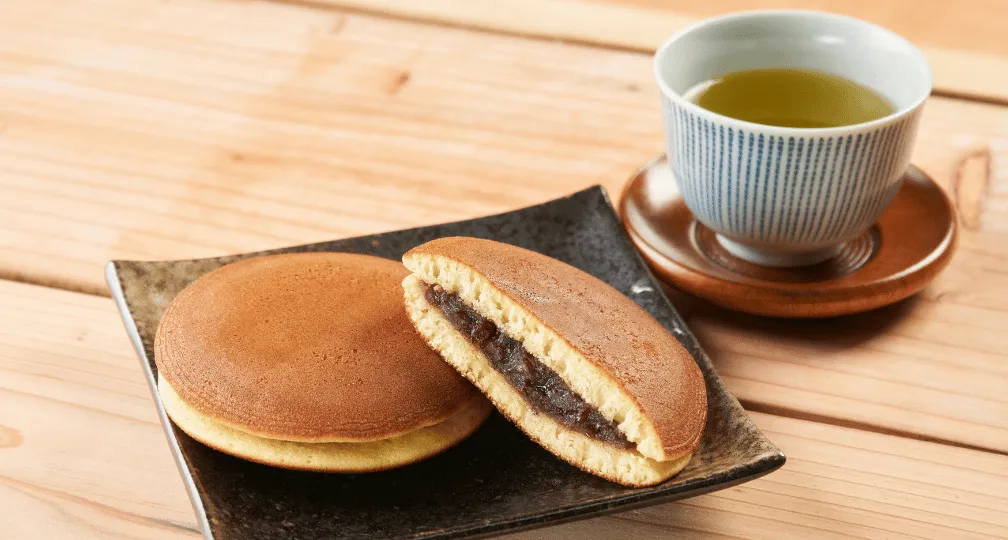
One of the enduring lessons of Doraemon is that having a reliable friend can be helpful, but becoming overly dependent on that friend can expose one to vulnerabilities. Doraemon consistently reaches into his four-dimension pocket to help Nobita overcome immediate challenges, but when Nobita becomes too dependent on them, things usually go wrong. The series repeatedly suggests that resilience comes from reducing vulnerability through personal growth and capability-building. Support from a trusted partner matters, but long-term resilience ultimately depends on one’s own ability to adapt and respond to challenges.
This is a lesson that many Canadians are undoubtedly learning today.
For decades, Canadians viewed North American integration as an enduring reality grounded not only in trade, but also in shared security interests, deeply intertwined supply chains, cross-border investment, and extensive people-to-people ties.
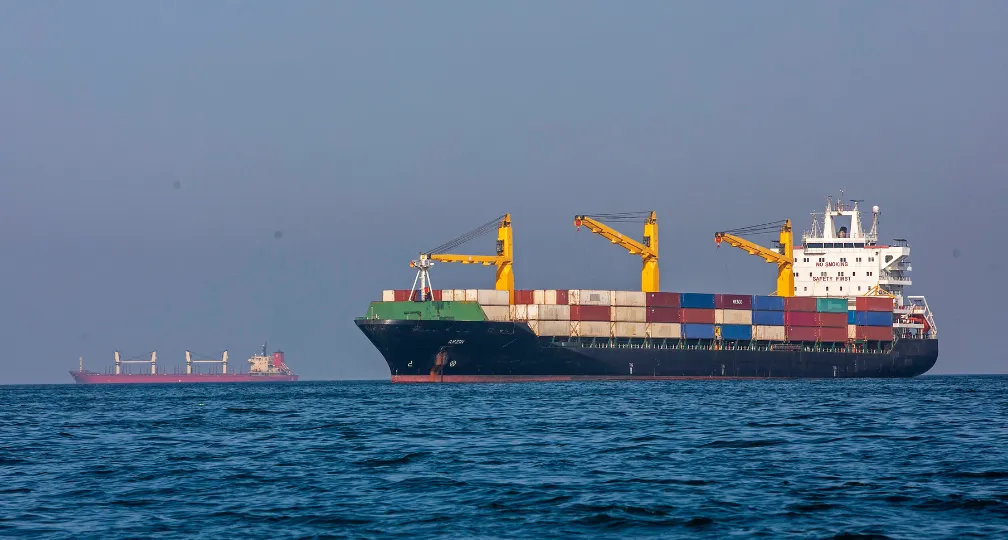
This deep integration is sometimes challenging to appreciate from abroad, but comes naturally to many Canadians (and Americans). The two countries share the longest international border in the world, stretching 8,891 km (approximately equivalent to travelling from Tokyo to Kyoto and back 10 times). While the number of travelers has decreased in recent months, on average, approximately 328,000 people (close to the population of Maebashi City in Gunma Prefecture) cross the border every day. The economic relationship is amongst the most integrated in the world – in terms of trade value, US$3.6 billion in goods and services flows across the border on a daily basis – this is US$2.5 million per minute. The automotive sector illustrates the depth of the U.S.-Canada economic integration in particular. What started with an agreement signed in 1965 to eliminate tariffs on automobiles and parts produced in either country was further strengthened by the North America Free Trade Agreement (NAFTA) and subsequently the U.S.-Mexico-Canada Agreement (USMCA) renegotiated under the first Trump Administration, the two countries have developed a deeply integrated supply chain in which automotive components may cross the border seven or eight times before final assembly. Such an integrated economic relationship is also underpinned by a uniquely close security partnership, including the binational NORAD command, which has coordinated continental aerospace defence since 1958.
Yet the relationship extends further beyond geography, trade, and security. Following the terrorist attacks of September 11, 2001, when the U.S. closed its airspace, it was Canada that accepted hundreds of diverted international flights carrying thousands of passengers. The experience of the residents of Gander, Newfoundland, who welcomed stranded travelers into their community, later inspired the award-winning musical Come From Away, which made its Japanese stage debut in 2024. The story has become a lasting symbol of the human ties, mutual trust, and sense of shared community that underpin the bilateral relationship. Political disagreements happened occasionally, yet few questioned the fundamental trajectory of the partnership.
Trump 2.0 has challenged that assumption.
For many Canadians, the shock extends beyond tariffs or trade disputes. The U.S. has long been viewed as Canada’s closest ally, partner, and, in many ways, part of a North American family. What has been challenged is not the importance of the relationship but assumptions about its predictability.
The Canadian response resembles the five stages of grief. Canadians have moved from denial that campaign rhetoric would become policy, to frustration at treatment by a close ally, to a growing acceptance that while North American integration remains indispensable, greater diversification and resilience are necessary in a less predictable environment.
The central question facing Canada today is not whether the U.S. remains important. Geography, economics, security, and history ensure that the relationship will remain foundational to Canada’s prosperity and security. The more pressing question is how Canada should adapt to an era of heightened geopolitical competition and greater policy unpredictability, and an environment in which deep integration and uncertainty coexist. For many Canadians, the answer is growing in clarity: resilience requires reducing vulnerability.
This logic is increasingly reflected in Canadian policy. Prime Minister Mark Carney said at the 2026 World Economic Forum Annual Meeting that “we are in the midst of a rupture, not a transition”. A rupture, in this sense, reflects a growing recognition that the assumptions underpinning the post-war world order can no longer be taken for granted and that a return to the previous status quo cannot be assumed. Last month, Foreign Minister Anita Anand stated before the United Nations General Assembly that “[Canada] can no longer afford to be overly reliant on any one partner” and emphasized that Canada is “diversifying our ties, and building stronger relationships with new and old partners alike”.
Practically, Canada is making efforts to broadening its network of economic and strategic partnerships with both established partners and emerging markets. Canada is uniquely positioned to be a bridge between Europe and the Indo-Pacific, given its geography, extensive trade agreements, and deep people-to-people ties across both the Pacific and Atlantic Oceans. Recent initiatives suggest that Canada seeks to capitalize on this advantage. Last month, Prime Minister Carney became the first non-EU leader to attend and speak at the European Parliament’s State of the Union address, where he called a more integrated Canada-EU partnership that would strengthen sovereignty, further deepen people-to-people ties, and create new opportunities for shared prosperity. At the same time, Canada has also accelerated efforts to expand its economic relationships with in the Indo-Pacific, with renewed negotiations on a Canada-India Comprehensive Economic Partnership Agreement and continued progress toward a Canada-ASEAN Free Trade Agreement, reflecting the broader strategy of diversifying and expanding access to some of the world’s fastest growing economies.
Yet, diversification is only one part of the story. Increasingly, Canada appears to be seeking to build resilience through cooperation in strategic sectors, not only for itself but also for trusted partners whose own vulnerabilities can have broader economic and geopolitical consequences. Critical minerals and Artificial Intelligence (AI) have emerged as two such examples. Beyond G7 cooperation via the Critical Minerals Action Plan, Canada has sought to further practical cooperation to develop a more secure supply chain, such as through cooperation with the European Investment Bank announced earlier in 2026. In Southeast Asia, Canada announced support for efforts to protect critical mineral supply chains from organized criminal activity, recognizing that the resilience of partner countries is increasingly intertwined with Canada’s own economic security. On AI, Canada has sought to advance collaboration through initiatives such as a Canadian-led open source AI consortium focused on reducing the barriers to adoption and strengthening user-control for small and medium-sized businesses and other organizations. Taken together, these initiatives point to a broader strategy of building a network of trusted partnerships capable of reducing shared vulnerabilities while enhancing collective competitiveness.
In this context, diversification should be best understood as a response to increasing uncertainty. It helps reduce overdependence, and in turn, vulnerability. Canada’s response to Trump 2.0 is not one of disengagement nor an attempt to unwind decades of North American integration. Rather, it is an effort to adapt to a less predictable environment through strengthening its ability to weather external shocks through broader trade links, deepening partnerships with Europe and the Indo-Pacific, strengthening domestic competitiveness, and reducing strategic dependencies. These are not signs of separation from the U.S.; they are efforts to ensure that an indispensable relationship does not become an excessive dependency. A Canada that is more economically resilient and strategically capable will bring healthier balance to the relationship, and in turn, be a more effective partner for everyone.
The result may involve short-term economic and political costs. Yet many Canadians increasingly view diversification as the necessary path toward a new equilibrium, one in which Canadian sovereignty, prosperity, and security are resilient to external shocks. Such resilience must come from preparing for unpredictability. For Canada, as for many countries in Europe and the Indo-Pacific, the future lies not in choosing between integration and autonomy, but in pursuing both simultaneously. The U.S. will remain Canada’s indispensable partner. But enduring partnerships are strongest when they are built on mutual capability rather than one-sided dependence. In this sense, diversification is not about weakening the Canada-U.S. relationship. It is about strengthening the foundations on which it rests. The lesson Canadians are learning, much like suggested in Doraemon, is that the strongest relationships are not those built on dependence, but those sustained by resilience.
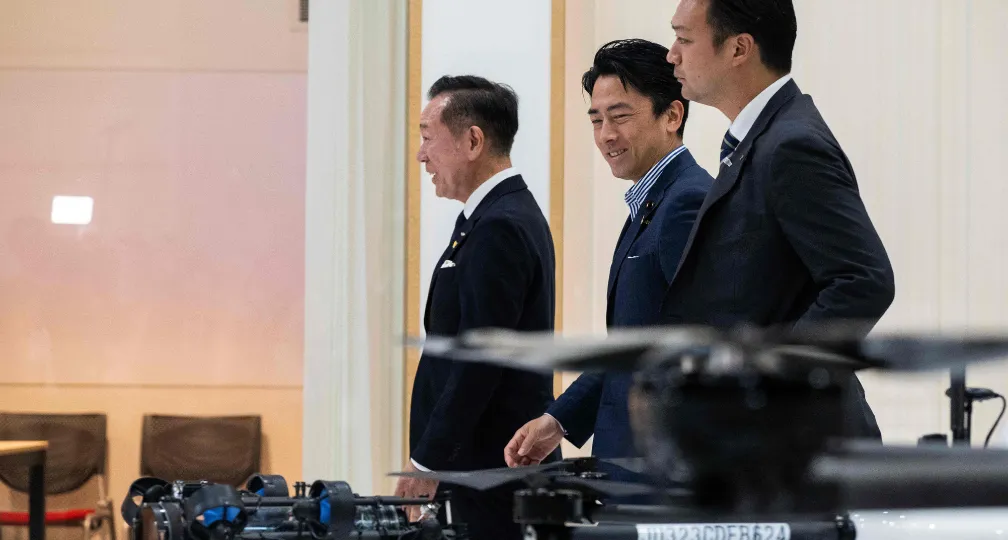
(Photo Credit: Pool/Getty Images AsiaPac)
Disclaimer: The views expressed in this IOG Commentary do not necessarily reflect those of the Institute of Geoeconomics (IOG) or any other organizations to which the author belongs.

Visiting Research Fellow
Anita Pan is a Canadian career foreign service officer with over sixteen years of experience working at the intersection of geopolitics, emerging technologies, and economic security. She is currently a Practitioner Fellow with the University of British Columbia’s School of Public Policy and Global Affairs and is on leave from Global Affairs Canada, where she most recently served at the Embassy of Canada to Japan. Over the course of her career, Anita has worked extensively on emerging technology and regional security issues, including artificial intelligence and defence innovation. While on leave from the foreign service, Anita is examining how geopolitical competition and technological change shape national economic and security interests, as well as how countries can build resilience against potential disruptions in critical technology supply chains. Anita holds a Master in Public Policy from Princeton University, and a Bachelor of Commerce from the University of British Columbia.
View Profile-
 China’s rare-earth success offers lessons in economic security2026.11.02
- Do Humanoids Dream of "The Chinese Dream"?2026.10.30
- What Doraemon can teach Canada about resilience2026.10.27
- The key to Japan’s growth strategy: ‘Proactive’ economic security2026.10.27
- Rebalancing Bilateral Trade or Reordering Global Production?2026.10.23

 Trump Faces a Reckoning in the Midterms, but it Might Not Matter for Tariffs2026.10.09
 Japan and India: Historic Strategic Convergence2026.07.07
- BRICS in India2026.10.09
- Orbán in the Public Eye: Anti-Ukraine Argument for Delegitimising Brussels2026.02.04
- Why Pax Silica Is About More Than AI Chips2026.07.15