
What Ukraine and Iran Teach Us About Deterrence
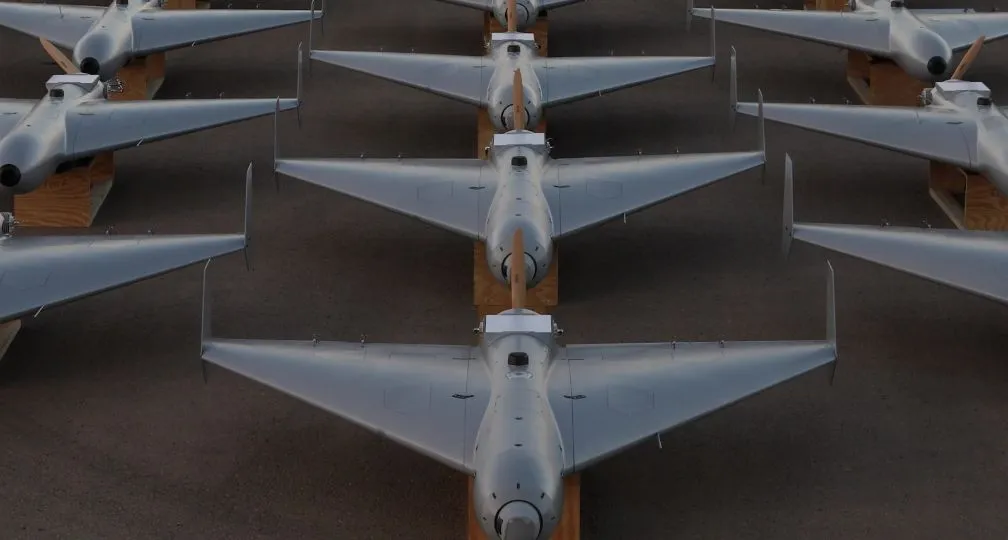
The battlefield value of these capabilities is now widely recognized. Their impact on deterrence, however, remains far less understood. As states integrate drones, missiles and other emerging technologies into their force structures, the wars in Ukraine and Iran offer important lessons about both the promise and the limits of asymmetric warfare.
Asymmetric Capabilities
Using inexpensive weapons to impose disproportionate costs on a technologically superior adversary is not a new idea. One precedent is China’s anti-access/area-denial strategy, which since the early 2000s has emphasized long-range missiles capable of threatening U.S. carrier strike groups at far lower cost than the ships they target. Although ballistic missiles are far more expensive than drones, a missile that can disable an aircraft carrier remains an effective asymmetric weapon.
The same logic applies in the air. Ukraine’s successful use of man-portable air-defense systems to destroy Russian aircraft and helicopters demonstrated how relatively inexpensive weapons can deny a larger military air superiority. Such cost-imposition strategies complicate the ability of major powers, including the United States, to establish control of the sea or air.
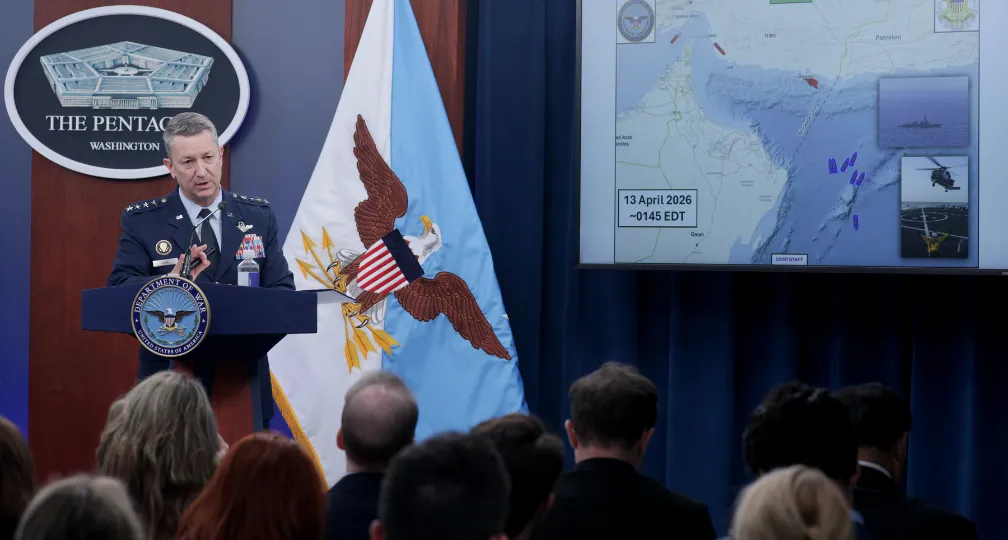
Anticipating these dynamics, the United States sought at the outset of the Iran war to destroy Iran’s principal military assets through rapid air and missile strikes. Yet that strategy appears to have underestimated Iran’s ability to sustain combat by concealing missile and drone stockpiles and production facilities in mountainous terrain. Destroying visible targets does little if an adversary can continue producing and launching new weapons.
In this respect, missile- and drone-based cost-imposition strategies share an important characteristic with the insurgencies the United States has confronted since the Cold War. Insurgents exploited asymmetries in the value placed on human life through suicide attacks. Modern asymmetric warfare instead exploits advances in precision strike and mass-produced unmanned systems. Both approaches seek to impose disproportionate military, political and economic costs on a stronger opponent.
Military powers are adapting as well. Drawing lessons from Ukraine, the United States employed inexpensive one-way attack drones during the Iran war. Under constant threat, unmanned systems often provide a more economical option than relying exclusively on expensive manned platforms that themselves become lucrative targets.
The result is an emerging competition in which both stronger and weaker militaries increasingly seek to destroy high-value assets with cheaper, more scalable weapons. Asymmetric warfare is no longer the strategy of the weak alone.
Invisible Deterrence
Although recent wars demonstrate the battlefield effectiveness of asymmetric capabilities, their value during peacetime is far less certain.
Deterrence depends on shaping an adversary’s decisions before conflict begins. Traditionally, that has relied on visible demonstrations of military power. During the 1995-96 Taiwan Strait crisis, for example, the United States deployed carrier strike groups to signal its willingness to intervene militarily. Freedom of navigation operations in the Taiwan Strait and South China Sea, as well as joint U.S.-South Korea exercises, continue that tradition by communicating resolve through military presence.
Missiles and drones, however, derive much of their value from concealment and dispersion. Their survivability depends on remaining hidden until they are used, and their primary contribution is sustaining combat over time rather than delivering an immediate show of force.
In other words, the characteristics that make asymmetric capabilities effective in war often make them less useful as visible instruments of deterrence. Simply possessing large numbers of drones or missiles does not necessarily send a convincing political signal to a potential adversary.
Problem of Uncertainty
As countries expand their asymmetric arsenals, assessing an opponent’s true capabilities becomes increasingly difficult.
Military planners have always faced uncertainty, but conventional forces at least provide relatively tangible measures. Analysts can estimate the size of an opponent’s fleet or air force and assess the forces required to counter it.
Missiles and drones present a different challenge. Their effectiveness depends not simply on numbers but on survivability, production capacity, the ability to penetrate defenses and the effectiveness of countermeasures. Advances in artificial intelligence are accelerating changes in drone performance while making future capabilities even harder to predict.
Political leaders deciding whether to use force are therefore confronted with greater uncertainty than ever before. They may overestimate an opponent’s capabilities, strengthening deterrence; or underestimate them, encouraging aggression.
The latter risk is particularly dangerous because deterrence by denial depends on convincing an adversary that military action will fail. If that assessment is wrong, the chances of war increase.
When Deterrence Fails
The wars in Ukraine and Iran illustrate the growing gap between battlefield effectiveness and peacetime deterrence.
Russia’s invasion of Ukraine is often described as a failure of U.S. or NATO extended deterrence. Yet neither the United States nor NATO had explicitly extended deterrence to Ukraine. The conflict is better understood as a failure of deterrence by denial: Ukraine’s military capabilities failed to convince Russia that an invasion would not succeed.
Before the war, few in Russia — or elsewhere — anticipated that Ukraine could use drones, man-portable air-defense systems and artificial intelligence to blunt a large-scale invasion. That surprise suggests Ukraine had been unable to communicate the true extent of its military capabilities before the war.
To be sure, Ukraine improved rapidly through battlefield innovation. Yet many of its key technologies, including the Delta battlefield management system, had been under development since Russia’s annexation of Crimea in 2014. Ukraine’s capacity for military innovation existed well before the invasion but failed to shape Russia’s calculations.
Iran presents a similar lesson. Its ability to sustain combat longer than many U.S. planners expected demonstrated the resilience of its military strategy. At the same time, that resilience had not translated into a clear deterrent message before the conflict.
Capabilities designed to remain concealed until war begins may increase combat effectiveness while doing little to deter aggression beforehand. Strengthening asymmetric capabilities, therefore, should not automatically be assumed to strengthen deterrence.
Implications for Japan
These developments highlight a widening divide between “visible deterrent capabilities” — conventional forces that demonstrate military presence during peacetime — and “less visible combat capabilities” that emphasize concealment, survivability and sustained combat.
As this gap widens, building a force optimized for both deterrence and wartime effectiveness becomes increasingly difficult.
That dilemma should shape Japan’s upcoming revision of its three national security strategy documents. Tokyo must strike the right balance between investments in long-range missiles and drones, which are increasingly essential in modern warfare, and visible assets such as the Izumo-class destroyers that continue to play an important role in peacetime deterrence.
For decades, Japan’s defense posture has emphasized visible deterrence while devoting comparatively fewer resources to capabilities most relevant in wartime, particularly missiles and unmanned systems. Strengthening those capabilities is no longer optional.
At the same time, Japan should consider ways to make at least some of those capabilities more visible through military exercises, public demonstrations and faster, more transparent research and development. Deterrence ultimately depends not only on military strength but also on an adversary’s perception of that strength.
The central lesson from Ukraine and Iran is that asymmetric capabilities are indispensable on tomorrow’s battlefield. Their contribution to deterrence, however, is far less certain. The challenge for Japan is not simply acquiring new weapons, but finding the right balance between military effectiveness in war and credible deterrence in peace.
(Photo Credit: CENTCOM/SWNS/アフロ)
[Note] This article was posted to the Japan Times on August 2, 2026:
https://www.japantimes.co.jp/commentary/2026/08/02/japan/ukraine-deterrence-lessons/
Geoeconomic Briefing
Geoeconomic Briefing is a series featuring researchers at the IOG focused on Japan’s challenges in that field. It also provides analyses of the state of the world and trade risks, as well as technological and industrial structures (Editor-in-chief: Dr. Kazuto Suzuki, Director, Institute of Geoeconomics (IOG); Professor, The University of Tokyo).
Disclaimer: The opinions expressed in this Geoeconomic Briefing do not necessarily reflect those of the International House of Japan, the Institute of Geoeconomics (IOG) or any other organizations to which the author belongs.

Senior Research Fellow
Hirohito Ogi is a senior research fellow at the Institute of Geoeconomics (IOG) studying military strategy and Japan’s defense policy. Before joining the IOG, Mr. Ogi had been a career government official at the Ministry of Defense (MOD) and Ministry of Foreign Affairs (MOFA) for 16 years. From 2021 to 2022, he served as the Principal Deputy Director for the Strategic Intelligence Analysis Office, the Defense Intelligence Division at the MOD, where he led the MOD’s defense intelligence. From 2019 to 2021, he served as a Deputy Director of the Defense Planning and Programming Division at the MOD. His recent publications include "Military Innovation and Procurement Trade-Offs: Explaining Japan’s Drone Adoption," The Pacific Review, September 2026; "Japan’s Information Security and Defence Reforms: From Inner Circle to National Standardisation," The RUSI Journal 171, no. 1 (February 2026): 58-69 (co-autnored); From Decline to Surge: The Defense Industry in the Era of Excess Demand (Institute of Geoeconomics, January 2026) (co-authored). He holds a Master’s degree in international affairs from the School of International and Public Affairs (SIPA), Columbia University, and a Bachelor’s degree in arts and sciences from the University of Tokyo.
View Profile